We scanned 100 websites. A score was not always an answer.
99 reports, 55 numeric scores, 44 withheld scores: what a varied public-web sample teaches about evidence, access, and useful AI-readiness assessments.
Read the evidence and next step →Field observations → better decisions
We scanned 100 public hostnames and selected distinct lessons—not 100 repetitive verdicts. Each article links the observation, the uncertainty and a practical next action.

99 reports, 55 numeric scores, 44 withheld scores: what a varied public-web sample teaches about evidence, access, and useful AI-readiness assessments.
Read the evidence and next step →
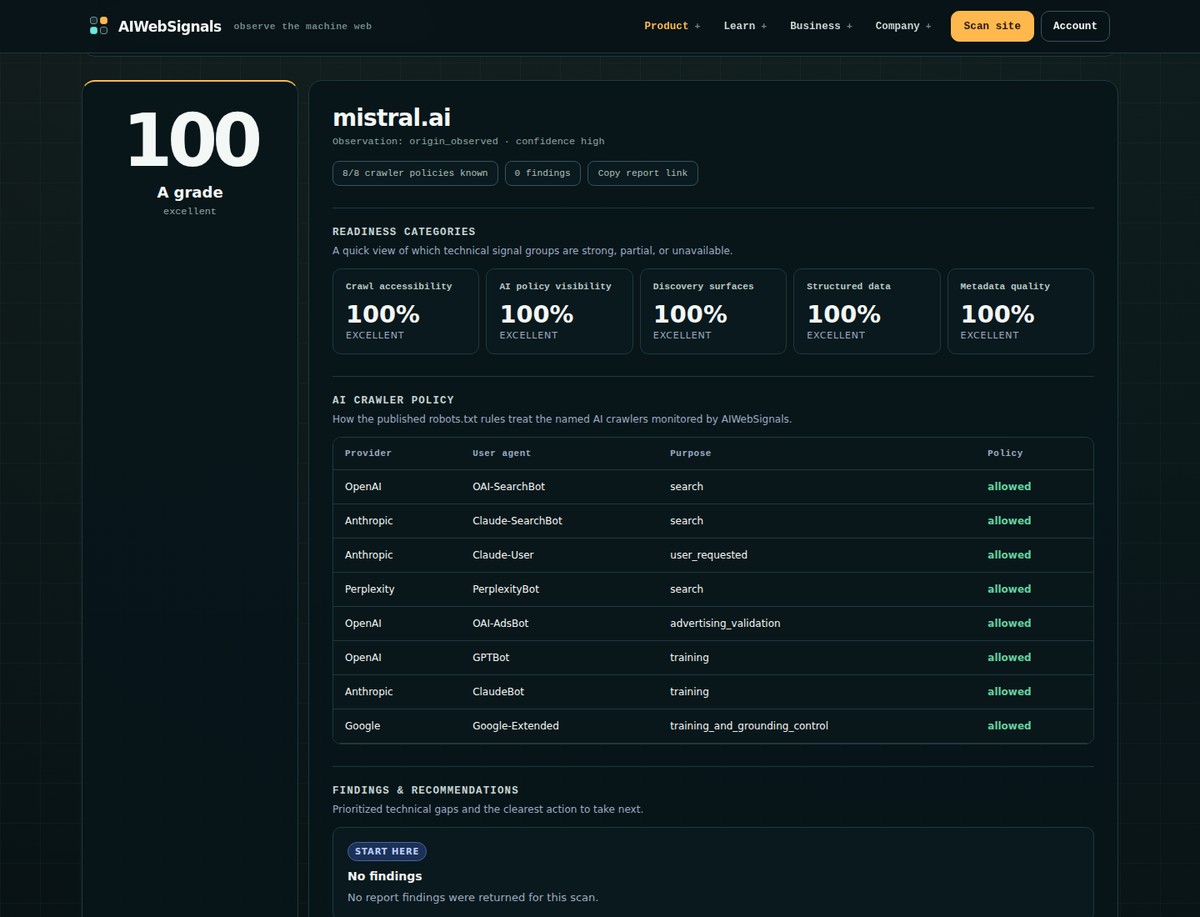
A concrete explanation of technical readiness versus evidence coverage, using Mistral’s October 2 public assessment and its 20 unknown checks.
Read the evidence and next step →
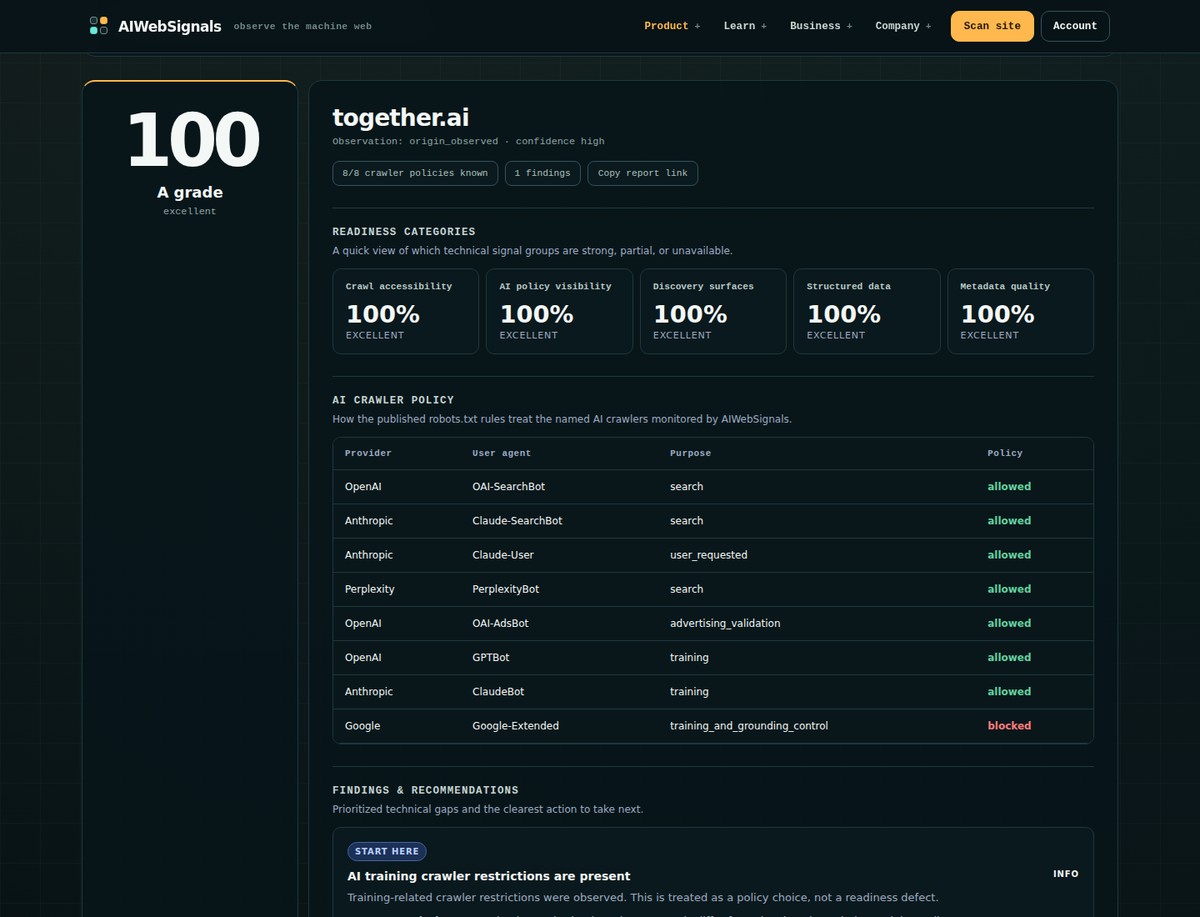
Together AI returned 100/100 while the scan recorded Google-Extended as blocked. Learn why policy choices and technical readiness should stay separate.
Read the evidence and next step →
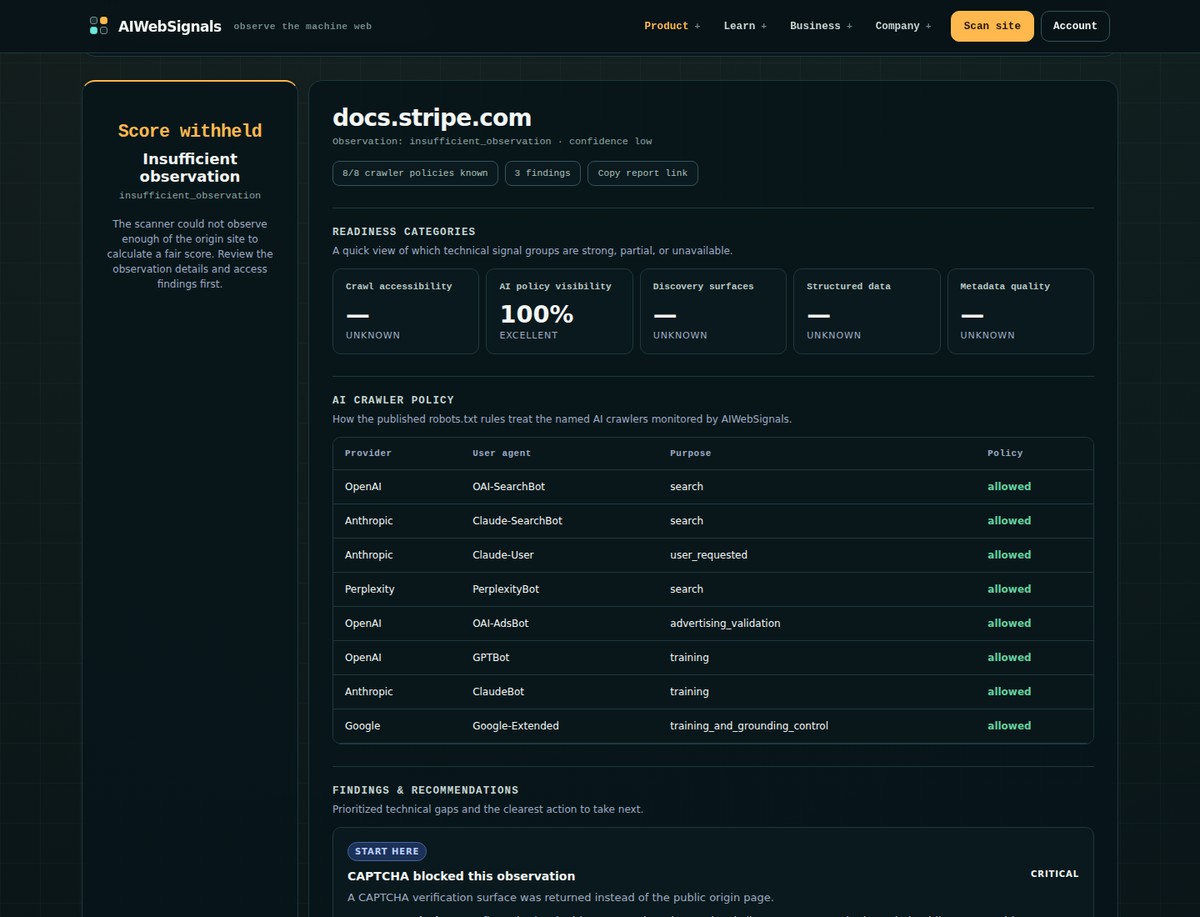
A 100/100 homepage result and a withheld documentation score show why hostname, response classification and inspection limits belong in every report.
Read the evidence and next step →Why a homepage-truncated finding belongs beside a strong score, and how to distinguish bounded technical checks from exhaustive inspection.
Read the evidence and next step →
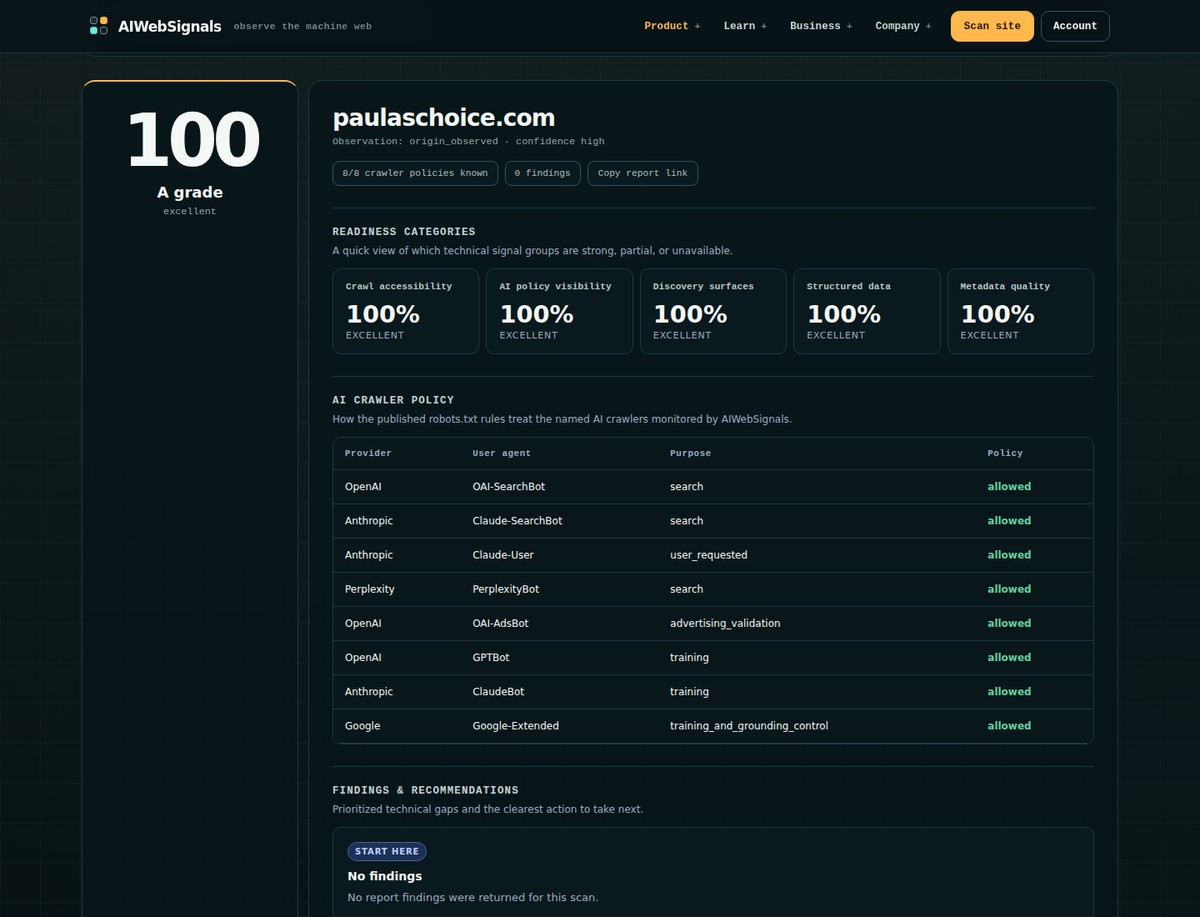
Paula’s Choice returned 100/100 in our public homepage assessment. The useful lesson for ecommerce is separating discovery from a verified shopping journey.
Read the evidence and next step →A 93/100 public snapshot with purpose-specific restrictions shows why publishers need more than an allow-all or block-all AI policy.
Read the evidence and next step →NASA’s public snapshot returned 91/100 with an informational llms.txt note. Emerging discovery proposals should not become universal requirements.
Read the evidence and next step →